Specialty Contact Lenses
Optos Digital Imaging
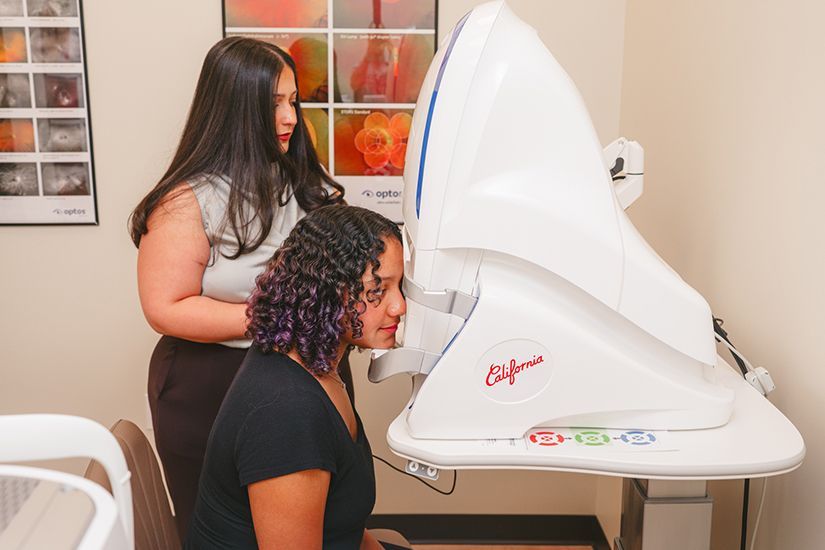
At Luxe Eye and Wellness, we use advanced digital retinal imaging to evaluate the health of your eyes without the need for traditional dilation drops. Our optometry office in Old Town Alexandria offers Optomap wide angle retinal imaging, which captures a detailed view of the retina in seconds. This technology allows our doctors to screen for retinal conditions such as diabetic retinopathy, macular degeneration, and retinal tears while minimizing discomfort and avoiding the side effects of dilation. The imaging process lets patients see the back of their eyes just as the doctor does and is safe for children, adults, and pregnant patients seeking comprehensive eye exams in Alexandria VA.
What to Expect
The IPL technology targets pigmentation and vascular issues, improving skin tone and texture. The controlled heat stimulates collagen production while the body naturally removes treated tissue, enhancing overall skin appearance. The procedure typically lasts 15-30 minutes and is well-tolerated with minimal discomfort.
The treatment targets imperfections and stimulates collagen production over multiple sessions. Results for light pigmentation and sun spots can appear in 1-2 treatments, while most concerns may need 2-6 sessions, spaced 2-4 weeks apart.

Every patient is different and so are their eyes. This means that there need to be different types of contact lenses to suit each individual. Some patients have corneal abnormalities which mean that conventional lenses won’t sit comfortably on the surface of their eyes, while others suffer from eye conditions that mean
normal contact lenses won’t be comfortable or could irritate their eyes.
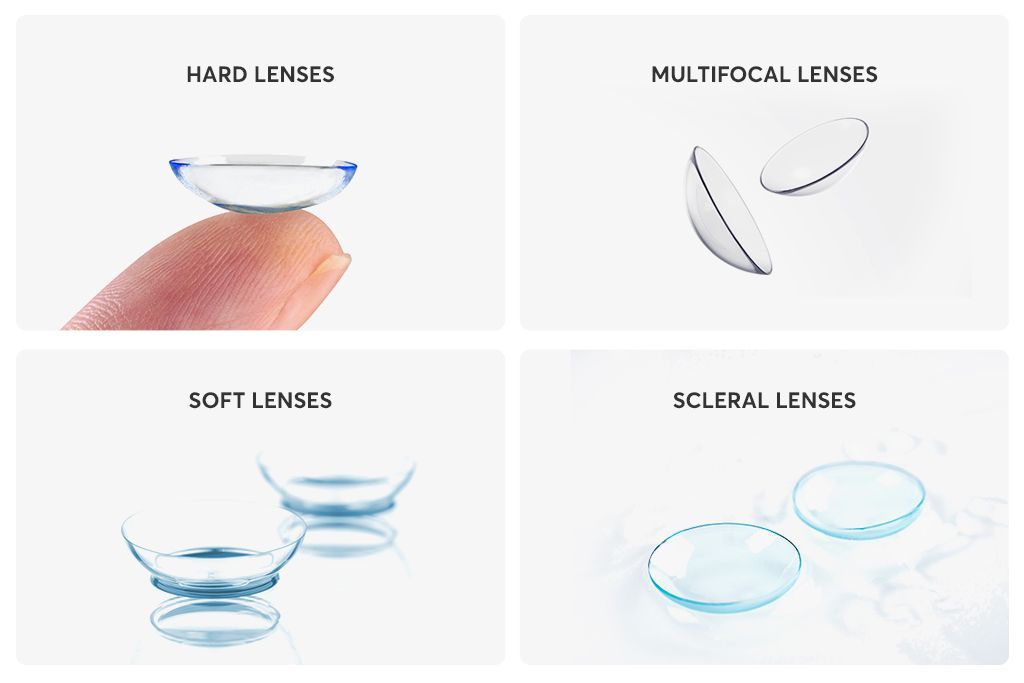
As you may have guessed from the name, specialty contact lenses are unconventional contacts that are designed for patients that regular contacts might not be suitable. Here are some of the main types of speciality contact lenses and who they are recommended for.
Who might be a good patient for specialty contact lenses?
Some of the patients that might benefit from specialty contact lenses include those who:
- have been diagnosed with dry eye syndrome
- have corneal scarring
- have been diagnosed with keratoconus, a condition characterized by the bulging of the cornea
- suffer from strabismus, a condition where the patient has an eye that turns in or out relative to the other
- have suffered an injury to the eye
- suffer from a peripheral corneal thinning disorder
- are intolerant to other types of lenses
Your
eye doctor or contact lens provider will be able to tell you
if you need specialty contact lenses and if so, which lenses would be best based on your individual requirements.

Rigid Gas-Permeable Lenses
Also known as RGP lenses, these are made from a special material that allows oxygen to pass through them and reach the surface of the eyes. This helps to keep the eyes hydrated and comfortable, making these lenses easier to wear, especially for patients who suffer from dry eyes. Dry eyes aren’t just a symptom, but a very real condition, characterized by dry, stiff, and uncomfortable eyes, blurred vision, and eye fatigue. RGP lenses are more rigid than soft lenses, and this helps to keep them stable and secure on the eyes so that patients can enjoy sharper vision. They also help the cornea to maintain its shape, which helps to minimize the effects of some corneal abnormalities.
Scleral Contact Lenses
Scleral contact lenses are very different to standard contact lenses. This is because scleral lenses are much larger in diameter, with three different sizes available depending on your specific needs. This size difference means that the edges of the contact lens fall on a white part of the eye, called the sclera rather than the cornea. Scleral lenses are also different in that they vault over the surface of the cornea rather than touching it, leaving a space between the front surface of the eye and the back of the contact lens. This makes scleral lenses a good choice for patients with dry eyes and corneal abnormalities. Space can trap tear film which keeps the eyes hydrated, while space also accommodates many corneal abnormalities, such as the bulge associated with keratoconus.
Limbal Fit Contact Lenses
Limbal contact lenses are another type of specialty lens that falls between rigid gas-permeable lenses and scleral varieties in terms of their size. Their larger overall diameter helps to increase their stability on the surface of your eyes. They also offer minimal interference with the eyelids, which helps to ensure comfort and clarity of your vision.
Hybrid Contact Lenses
Hybrid contact lenses are a combination of both soft and gas-permeable contact lenses, giving patients the opportunity to enjoy the best parts of both designs. The middle part of hybrid lenses is made from gas-permeable material that lets oxygen pass through to the eyes. However, the gas-permeable part of the lens is more rigid, and this firmer center gives the lens greater stability and the patient enhanced clarity. The RGP portion of the lens also helps to trap a tear film between the cornea and the lens so that the eye remains hydrated. Meanwhile, the outer edge of hybrid lenses is a soft lens skirt. This means that patients don’t have to deal with the hard edges associated with RGP lenses that may be uncomfortable. Instead, the comfort levels that patients experience are more like wearing fully soft lenses.
For more information about specialty contact lenses,
don’t hesitate to speak to our dedicated eye care team.
Helpful Articles
All Eyecare Services
We offer a wide variety of eye care services to the Alexandria community. Contact us with any questions about our services.

Keep In Touch
For non-urgent questions or to learn more about our services, contact us today!