Low Vision
Optos Digital Imaging
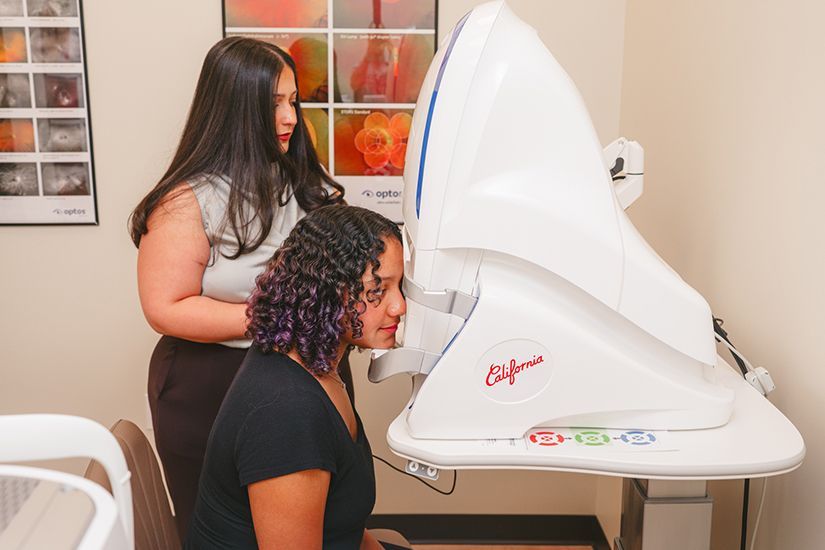
At Luxe Eye and Wellness, we use advanced digital retinal imaging to evaluate the health of your eyes without the need for traditional dilation drops. Our optometry office in Old Town Alexandria offers Optomap wide angle retinal imaging, which captures a detailed view of the retina in seconds. This technology allows our doctors to screen for retinal conditions such as diabetic retinopathy, macular degeneration, and retinal tears while minimizing discomfort and avoiding the side effects of dilation. The imaging process lets patients see the back of their eyes just as the doctor does and is safe for children, adults, and pregnant patients seeking comprehensive eye exams in Alexandria VA.
What to Expect
The IPL technology targets pigmentation and vascular issues, improving skin tone and texture. The controlled heat stimulates collagen production while the body naturally removes treated tissue, enhancing overall skin appearance. The procedure typically lasts 15-30 minutes and is well-tolerated with minimal discomfort.
The treatment targets imperfections and stimulates collagen production over multiple sessions. Results for light pigmentation and sun spots can appear in 1-2 treatments, while most concerns may need 2-6 sessions, spaced 2-4 weeks apart.


Low vision is a term for conditions that result in reduced sight and cannot entirely be corrected with eyeglasses, contact lenses, medicines or surgery. Several eye diseases or conditions can cause low vision and here we will discuss the four most common causes of low vision and their risk factors.
Macular Degeneration
Macular degeneration is a disorder that affects the retina, which is the light-sensitive tissue lining the inside of the eye. Within the retina, the area responsible for sharp central vision (called the macula) deteriorates, causing blurred vision. This can cause a blind spot in the central area of vision, which leads to low vision.
There are two types of
macular degeneration – non-exudative (dry form) and exudative (wet form). The dry form usually progresses slowly, while the wet form causes more rapid and severe vision loss due to abnormal blood vessels developing under the macula and leak fluid and blood. The biggest risk factor for macular degeneration is age. Other risk factors include genetics, race, smoking, and high blood pressure.
Diabetic Retinopathy
Diabetic retinopathy is a diabetes complication that affects the eyes. High blood sugar levels cause damage to blood vessels in the retina. These blood vessels can swell and leak (called macular edema). Sometimes they close, stopping blood from passing through (called macular ischemia). At first,
diabetic retinopathy may cause no symptoms or only mild vision problems. However, over time, it can severely damage the retina, leading to low vision. Anyone who has diabetes can develop
diabetic retinopathy. The risk increases for those who have had diabetes longer, as well as those with poor control of blood sugar levels, high blood pressure or cholesterol as well as those who smoke.
Cataracts
A cataract is a clouding of the lens in the eye that affects vision. This clouding can block the light from reaching the retina at the back of the eye, resulting in a general loss of vision. In some cases, a
cataract can be surgically removed.
Cataract surgery has a high success rate in otherwise healthy eyes but it is not always possible for people who also have other eye diseases. While the risk of cataract increases as you get older, other risk factors include diabetes, smoking, alcohol use, and prolonged exposure to ultraviolet sunlight.
Glaucoma
Helpful Articles
All Eyecare Services
We offer a wide variety of eye care services to the Alexandria community. Contact us with any questions about our services.

Keep In Touch
For non-urgent questions or to learn more about our services, contact us today!


