Glaucoma Testing

Learn More

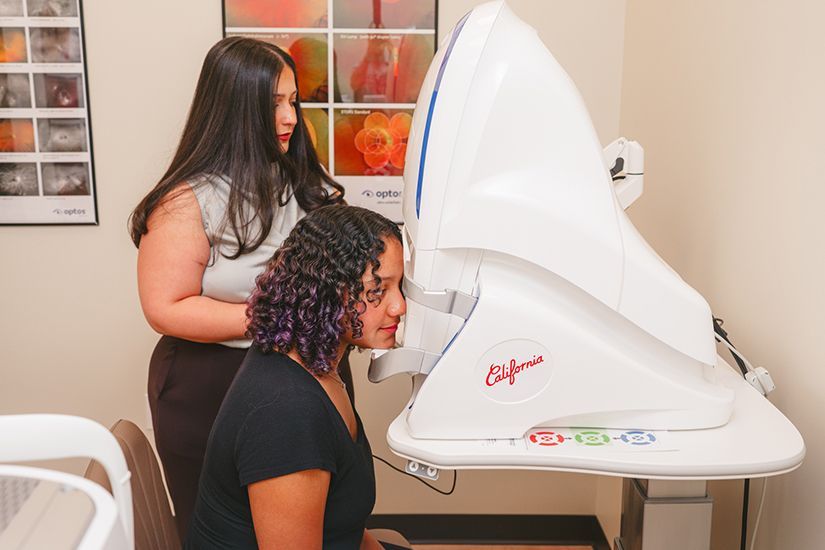
At Luxe Eye and Wellness, we use advanced digital retinal imaging to evaluate the health of your eyes without the need for traditional dilation drops. Our optometry office in Old Town Alexandria offers Optomap wide angle retinal imaging, which captures a detailed view of the retina in seconds. This technology allows our doctors to screen for retinal conditions such as diabetic retinopathy, macular degeneration, and retinal tears while minimizing discomfort and avoiding the side effects of dilation. The imaging process lets patients see the back of their eyes just as the doctor does and is safe for children, adults, and pregnant patients seeking comprehensive eye exams in Alexandria VA.
Person wearing a gray VR headset and black jacket against a plain background

What to Expect

The IPL technology targets pigmentation and vascular issues, improving skin tone and texture. The controlled heat stimulates collagen production while the body naturally removes treated tissue, enhancing overall skin appearance. The procedure typically lasts 15-30 minutes and is well-tolerated with minimal discomfort.

The treatment targets imperfections and stimulates collagen production over multiple sessions. Results for light pigmentation and sun spots can appear in 1-2 treatments, while most concerns may need 2-6 sessions, spaced 2-4 weeks apart.

Person using a medical eye-scanning device with a screen showing a close-up of an eye

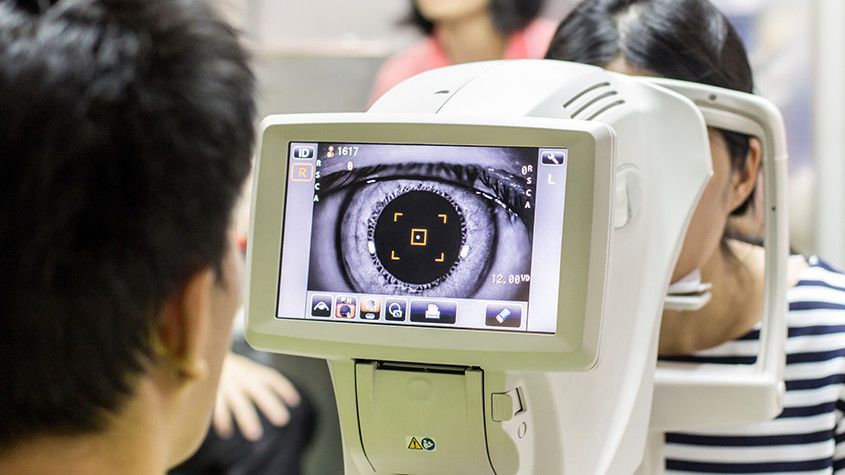
You might be surprised at how many tests eye doctors use to diagnose glaucoma. A proper diagnosis requires careful evaluation of many aspects of your eye’s health – from eye pressure to cornea thickness to the health of your optic nerve. This article describes how your eye doctor assesses your risk and all the tests needed to properly diagnose glaucoma.

Risk Factor Assessment

Your eye doctor will begin by assessing your risk level for developing glaucoma. This will help determine the frequency and extent of testing needed. Through a family history and medical questionnaire, the eye doctor is looking for the following risk factors:


  • Over the age of 60
  • Ethnic background such as African or black Caribbean descent, Hispanic, or Asian
  • Family history of glaucoma, such as a sibling or parent with glaucoma
  • History of eye conditions, injuries or surgeries
  • Prolonged corticosteroid use (eye drops, pills, inhalers or creams)
  • Chronic conditions that affect blood flow, such as migraines, diabetes, low blood
    pressure or hypertension
  • Current or former smoker
     

If you’ve already had a comprehensive eye exam, your eye doctor will also consider these risk factors:


  • Eye pressure higher than normal (above 21 mm Hg)
  • Thin corneas (less than 0.5 millimeters)
     

Your type of eyesight is also important. People with farsightedness are at a higher risk for narrow-angle glaucoma, a more serious type that can advance quickly. While nearsightedness is associated with open-angle glaucoma, which progresses slowly without any symptoms.

Standard Glaucoma Tests

During a comprehensive eye exam, your eye doctor will always check for glaucoma, regardless of the risk level. This provides a baseline for comparison as you age. There are two tests: tonometry and ophthalmoscopy.

Helpful Articles